The CSOK Hungary 2026 subsidy program is a topic on many families’ minds as housing expenses grow and government policy shifts.
For families in Hungary considering new homes—or perhaps adapting as their needs change—understanding this support system may be vital.
This guide touches on who can benefit, what’s changing in 2026, and some practical points about the subsidy process.
The article aims to offer clarity, especially for parents, couples planning families, and Hungarian residents hoping for financial support with property goals.
What Is the CSOK Subsidy in Hungary?
The CSOK (Családi Otthonteremtési Kedvezmény) is Hungary’s flagship family housing subsidy. Its aim? Supporting households as they buy or build residential property.
The government offers non-repayable grants and sometimes low-interest loans, linked to the number of children in the household.
This scheme has already helped tens of thousands, but for 2026, updates may reshape who qualifies and the options available.
Many expect these changes to focus on boosting family growth and improving the national housing stock, but there’s always a bit of uncertainty until new legislation is finalized.

Why CSOK Still Matters in 2026?
Continued Support for Growing Families
Hungary’s birth rate remains an ongoing concern for policymakers. Programs like CSOK are seen as critical incentives.
Families planning to expand—maybe parents awaiting their first or third child—will likely find these updates important for future planning.
Adapting to Price Shifts
Housing prices in Hungary have fluctuated. Looking at the trends, some might worry that CSOK support won’t match market realities.
The hope, or maybe the worry, is that new eligibility thresholds in 2026 will address these gaps. Of course, there may never be a perfect balance.
Urban vs. Rural Differences
There’s a noticeable split between how CSOK works in Budapest and other regions. Regulations can slightly differ, especially for village CSOK or “falusi CSOK,” which specifically targets less-populated towns.
Some families—especially those seeking more space—find the countryside subsidies appealing, and perhaps less competitive.
Who Can Qualify? Main CSOK 2026 Eligibility Rules
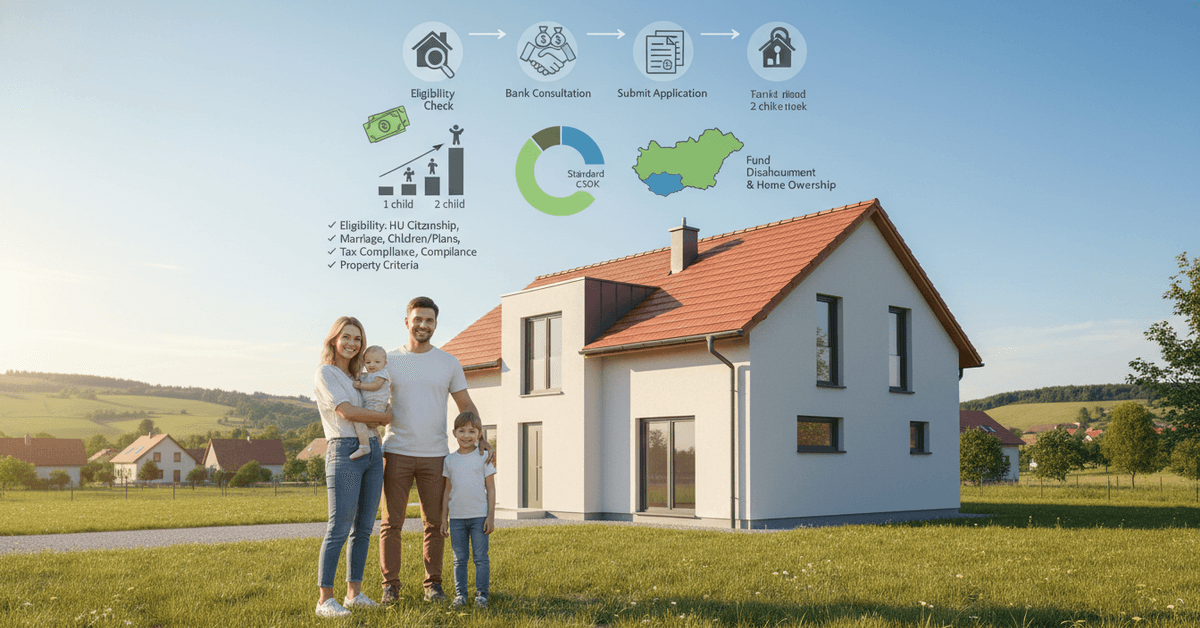
Rule changes are expected, but the core requirements most likely remain familiar. These include citizenship, family status, and property criteria. Eligibility can shift a bit based on which version of CSOK is pursued, but a few constants persist:
- Hungarian citizenship or permanent residence permit
- Registered partnership or marriage, with or without children
- Documented plan to have children (‘vállalt gyermek’ grants for future births)
- No significant tax or social security arrears
- Buying new or used property that meets minimum criteria, such as floor space
Age and marital status also shape access. Unmarried couples often face extra steps or might qualify for less support. Married applicants or single parents can sometimes claim higher amounts.
A lot depends on current family configuration, and policy can be surprisingly nuanced here—so double-checking details is always worth considering.
Types of CSOK Subsidies in 2026
Standard CSOK
The classic model supports both new builds and purchases of used homes. Grants are proportionate to family size—for example, more children mean higher maximums.
In 2026, observers expect further incentives for larger families, but exact numbers typically update yearly.
‘Falusi CSOK’ – Rural Housing Subsidy
This specialized form targets homes in smaller settlements. The rules on minimum property value may be more flexible and sometimes the conditions feel easier to navigate.
Locals interested in revitalizing rural areas—or just seeking quieter living—have increasingly favored this scheme in the past.
CSOK Loan Add-On
In some situations, a discounted-interest loan is available alongside the main grant. These loans can stretch buyer budgets further, especially for new builds or significant renovations.
However, access often depends on income and credit history, somewhat like standard mortgage procedures but with added state backing.
How Much Can Families Get from CSOK in 2026?
Amounts shift each year, and the details for 2026 likely won’t be final until just before rollout. Generally, funding tiers rise based on number of children involved. For example:
- 1 child: Lower grant maximum, perhaps suitable for newlyweds or small families
- 2 children: Middle tier, often a sweet spot for growing families
- 3 or more: Highest support, intended to boost larger households
Older subsidy rounds typically saw grants ranging from 600,000 to 10 million HUF—but sources differ and future amounts aren’t confirmed yet.
Given legislative unpredictability, it may be prudent to monitor news closer to 2026 for updates. And perhaps, a little flexibility in planning isn’t a bad thing.
Typical Steps to Apply for CSOK
- Assess eligibility and gather required personal documents
- Choose the desired property (purchase, build, or renovate)
- Consult with a CSOK-accredited bank or legal professional
- Submit grant application, with all supporting documents
- Undergo verification (property checks, credit standing review)
- Receive approval and, in due course, funds disbursement
Bottlenecks are not uncommon. A minor paperwork glitch can slow things for weeks. Maybe even longer, if local authorities need extra proof or clarification.
Applicants often describe this process as a test of patience as much as planning. Checking, double-checking, and filing on time helps, but a little luck might play a role too.
Key Documents and Proofs Needed
Typically, applying for CSOK involves:
- Identification papers and proof of citizenship or residency
- Marriage certificate or registered partnership documentation
- Children’s birth certificates, or declaration of future planned children
- Income proofs (possibly for CSOK loans)
- Property details, including existing title and compliance evidence
- Certain tax reports, credit history, and official forms
Banks offering CSOK often supply application checklists. Variations exist among regions, so requirements can shift based on the applicant’s location, the property’s age, or other family specifics.
Many families find it helpful to consult with a local legal expert—especially for rural or unusual property types.
Legal and Tax Considerations
Tax Exemptions and Obligations
CSOK grants may trigger tax benefits. Property purchase-related taxes are sometimes waived or lowered, at least in certain circumstances.
But, there can be clawback conditions—if, perhaps, the property is sold too soon, or promised children aren’t born within the agreed period. Reading the fine print, ideally with trustworthy advice, is sensible.
Property Use and Ownership Rules
Recipients often need to live in the granted property for a minimum period. Letting out the home, or selling quickly, could interfere with grant retention.
These restrictions do change, though, depending on the year and location. Some banks also impose parallel conditions, so applicants might juggle several sets of obligations.
Tips for Maximizing Your CSOK Experience
Track Program Updates Regularly
The Hungarian government tends to update eligibility or application guidelines year to year. Sometimes details change even within the same year.
Staying aware could make a significant difference, especially when documentation windows are narrow or requirements suddenly update.
Consult with Multiple Lenders
Banks may interpret CSOK eligibility rules slightly differently, or offer varying guidance based on other products tied to the process (mortgages, for example).
Comparing banks and asking questions is often worthwhile, even if it takes a little more time upfront.
Consider Future Plans Carefully
Some families commit to planned children, but life has a way of surprising everyone. It might be wise to factor in possible delays or changes.
After all, paperwork is easier to amend than reality, but not always by much. There’s a balance to consider, and perhaps a dose of humility in long-term planning.
Where to Find Official Information?
While media outlets provide regular summaries, the best information always comes from primary sources. The Hungarian government’s csalad.hu portal is the official source for CSOK rules and applications.
Banks, such as OTP, K&H Bank, and Erste will generally keep their CSOK product pages updated in line with the latest legal changes.
For major updates or clarifications, consulting legal or financial professionals working with CSOK may save time and, perhaps, future frustration.
Potential Challenges and Grey Areas
Navigating CSOK is not always straightforward. Requirements can shift. Banks may interpret things differently. Some applicants find the process daunting, especially if they live abroad or own uncommon property types.
Experiences, as shared in family forums, can vary from smooth success to bureaucratic headaches.
It’s possible—not certain, of course—that policy in 2026 will become simpler. Or perhaps just different in a way that brings fresh challenges. Either way, keeping documentation organized and timelines clear seems wise for any applicant.
Final CSOK Thoughts
The CSOK Hungary 2026 subsidy can be valuable for families planning to buy, build, or renovate a home. Before applying, review the eligibility rules, property requirements, documents, and possible clawback conditions carefully.
It is also wise to follow official updates because subsidy amounts and rules may change before rollout. With proper preparation, CSOK can support housing goals while helping families avoid delays and costly mistakes.